
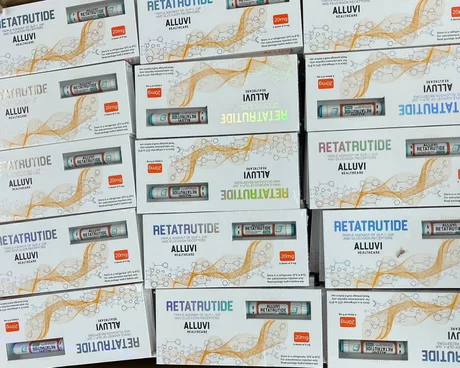
The growing interest in emerging weight-management treatments has created a large amount of online information, making authenticity an important issue for consumers and researchers. Discussions surrounding intex pharma retatrutide can include product descriptions, personal experiences, promotional claims, research references, and opinions from online communities. Because these sources may differ greatly in quality, readers should approach authenticity questions carefully rather than assuming that every claim is accurate.
Understanding how to evaluate information can help readers distinguish between verifiable facts, personal interpretations, marketing language, and unsupported statements. This is especially important when the subject involves an investigational compound or a product whose identity, source, formulation, or regulatory status may not be clearly established.
Why Authenticity Matters
Authenticity is more than determining whether a website looks professional. It involves examining whether the information comes from a credible source, whether claims can be independently verified, and whether descriptions accurately represent what is known.
When researching intex pharma retatrutide, consumers may encounter statements about ingredients, purity, intended uses, dosage, effectiveness, manufacturing standards, or expected outcomes. Such statements should not automatically be treated as established facts. A trustworthy assessment requires evidence supporting the specific claim.
Authenticity also involves transparency. A credible source should provide enough information for readers to understand who is making the claim, what evidence supports it, and what limitations apply. Vague descriptions or exaggerated promises can make it difficult to determine whether the information is reliable.
Checking the Source Behind the Information
One of the first authenticity questions is simply: Who published this information?
Readers should identify the organization, company, researcher, publication, or individual responsible for the content. A page without meaningful authorship or contact information deserves additional scrutiny. Similarly, an anonymous review cannot provide the same level of accountability as information supported by identifiable evidence.
For intex pharma retatrutide, it can be useful to compare claims across independent sources rather than relying on a single webpage. If a product description makes a scientific claim, readers can look for supporting research or authoritative documentation. If a company makes a statement about its manufacturing practices, consumers can examine whether appropriate documentation is publicly available.
Understanding the Difference Between Retatrutide and Product Claims
Another important authenticity issue is separating information about the investigational compound retatrutide from claims about a particular commercial product.
Retatrutide is an investigational medicine that has been studied in clinical research, but research findings about the compound should not automatically be interpreted as proof that every product marketed under a related name has the same composition, quality, or characteristics.
This distinction matters when reading information about intex pharma retatrutide. A website may reference scientific studies while discussing a specific product. Readers should ask whether the cited research actually evaluates that product or merely concerns the broader compound. Connecting a commercial product to scientific research without demonstrating that connection can create a misleading impression.
Examining Product Descriptions Carefully
Product descriptions often contain technical terminology that can make a product appear authoritative. However, technical language does not necessarily prove authenticity.
Consumers should examine whether descriptions clearly identify the substance, manufacturer, formulation, storage requirements, testing information, and relevant documentation. Claims such as “high purity,” “research grade,” or “laboratory tested” should ideally be supported by meaningful evidence rather than appearing only as promotional phrases.
When reviewing intex pharma retatrutide information, readers should also watch for inconsistent details. Differences between product pages, labels, certificates, and third-party descriptions may raise questions that require further verification.
Evaluating Certificates and Testing Claims
Laboratory documentation can be useful when assessing authenticity, but the existence of a document alone does not establish that a product is genuine.
A certificate of analysis, for example, should be examined for relevant details such as the testing laboratory, sample identification, testing methods, dates, measured results, and relationship to the specific batch being discussed. Readers should be cautious when documentation lacks identifying information or cannot be independently connected to the product.
The same principle applies to claims about purity. A numerical purity percentage may sound convincing, but consumers should consider how the figure was obtained and whether the testing applies to the exact material being offered.
Recognizing Marketing Language
Marketing can strongly influence perceptions of authenticity. Words such as “premium,” “trusted,” “advanced,” or “verified” may create an impression of quality without providing evidence.
When researching intex pharma retatrutide, readers can improve their evaluation by separating measurable claims from persuasive language. Instead of asking whether a description sounds convincing, ask what evidence demonstrates the statement.
Promises involving dramatic outcomes should receive particularly careful attention. Individual experiences and promotional testimonials cannot establish general effectiveness, safety, or quality.
Looking at Online Reviews With Caution
Reviews can provide insight into how people perceive a product or website, but they are not definitive proof of authenticity.
A positive review may describe a genuine experience, yet it does not independently confirm product identity or laboratory quality. Likewise, a negative review may reflect an individual problem that does not explain the broader situation. Reviews can also be incomplete, outdated, biased, or difficult to verify.
For intex pharma retatrutide, readers should look for patterns rather than relying on one testimonial. They should also distinguish between comments about customer service, packaging, shipping, and actual evidence concerning product composition.
Checking Regulatory and Scientific Context
Regulatory status is another essential part of authenticity research. Readers should determine whether a product or treatment is approved for a particular purpose in their jurisdiction and avoid assuming that availability online means regulatory approval.
Scientific context matters as well. Clinical research can provide information about an investigational compound, but study results have specific populations, methods, limitations, and conditions. A research finding should not be transformed into a guarantee for an individual consumer.
Reliable sources generally distinguish between what has been demonstrated, what remains under investigation, and what is merely speculative.
Identifying Red Flags
Several warning signs can justify additional research. These include unrealistic promises, missing company information, unexplained scientific terminology, unverifiable certificates, pressure to purchase quickly, inconsistent product descriptions, and claims that appear significantly stronger than available evidence.
Another warning sign is when a source discourages independent verification. Transparent information should allow readers to ask reasonable questions and examine supporting evidence.
These principles are useful when evaluating intex pharma retatrutide because authenticity cannot be established through appearance alone. A professional website, attractive packaging, or confident wording is not a substitute for verifiable documentation.
Building a More Reliable Research Process
A systematic approach can make authenticity research easier. Start by identifying the exact claim being evaluated. Next, determine who made the claim and what evidence is provided. Then compare that evidence with independent scientific or regulatory information.
Readers should record important details rather than relying entirely on memory. Differences between sources become easier to recognize when product names, claims, dates, testing information, and supporting references are compared directly.
It is also useful to prioritize primary and authoritative sources when possible. Scientific publications, official regulatory information, and clearly documented laboratory evidence generally provide stronger foundations than anonymous posts or promotional material.
Making Responsible Conclusions
Authenticity questions do not always have an immediate yes-or-no answer. Sometimes the most responsible conclusion is that available information is insufficient to verify a claim.
This is especially relevant to intex pharma retatrutide because online discussions may combine genuine scientific information with commercial descriptions and personal opinions. Readers should avoid filling evidence gaps with assumptions.
A careful conclusion should reflect the strength of the available evidence. If information can be independently verified, it may deserve greater confidence. If important details remain unclear, uncertainty should be acknowledged.
Conclusion
Exploring authenticity questions related to intex pharma retatrutide requires careful attention to sources, scientific context, documentation, product descriptions, reviews, and regulatory information. Consumers should avoid judging credibility solely from polished websites, testimonials, technical terminology, or promotional promises.
The strongest approach is to verify specific claims, compare independent sources, examine supporting documentation, and recognize the difference between research about an investigational compound and claims about a particular commercial product. By applying these principles, readers can make more informed judgments about online information while avoiding conclusions that go beyond the available evidence.
