
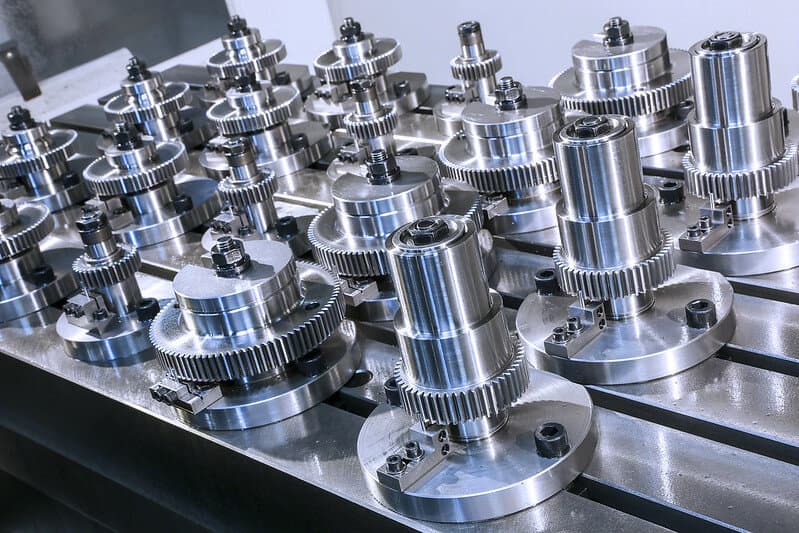
Engineering innovation depends on speed, precision, and adaptability. In highly competitive industries such as aerospace, automotive, medical devices, robotics, and consumer electronics, the ability to transform a concept into a functional prototype quickly can determine market success. One of the most effective manufacturing approaches that supports this need is low volume cnc machining. By combining precision engineering with small-batch production flexibility, this method plays a critical role in rapid prototyping and early-stage product development.
Low volume cnc machining bridges the gap between one-off prototypes and full-scale mass production. It allows engineers to test, refine, and validate designs using production-grade materials and accurate geometries without the financial risks associated with high-volume manufacturing.
Understanding Low Volume CNC Machining
Low volume cnc machining refers to the production of small quantities of parts—typically ranging from a single prototype to a few hundred units—using Computer Numerical Control (CNC) machines. Unlike traditional mass production methods that require expensive tooling and molds, CNC machining relies on programmed instructions to control cutting tools and shape materials with high precision.
The process begins with a CAD model created by engineers or product designers. This digital design is then converted into machine-readable instructions using CAM software. CNC mills, lathes, or multi-axis machining centers follow these instructions to cut, drill, and shape raw materials into finished components.
This approach is particularly well-suited for rapid prototyping because it eliminates the need for specialized tooling, reduces setup time, and offers unmatched flexibility in design changes.
The Role of Rapid Prototyping in Engineering
Rapid prototyping is a development strategy that emphasizes quick fabrication of physical models to evaluate design concepts, performance, and manufacturability. Engineers rely on prototypes to identify potential flaws, test mechanical strength, evaluate tolerances, and gather user feedback.
Low volume cnc machining supports rapid prototyping by producing highly accurate and durable parts that closely resemble final production components. Unlike some additive manufacturing methods that may have material limitations or surface finish constraints, CNC machining works with metals and plastics commonly used in end-use products.
This capability enables engineers to conduct real-world performance testing under realistic conditions. For example, aerospace components can be tested for structural integrity, and medical device housings can be evaluated for ergonomic performance before committing to mass production.
Advantages of Low Volume CNC Machining for Prototyping
High Precision and Accuracy
CNC machines operate with tight tolerances, often within microns. This precision ensures that prototypes meet exact design specifications. Accurate parts allow engineers to test assembly fit, mechanical movement, and dimensional integrity without compromise.
For industries where precision is non-negotiable, such as aerospace and medical technology, low volume cnc machining provides the reliability required during early-stage development.
Wide Material Selection
One major advantage of CNC machining is its compatibility with a broad range of materials. Engineers can prototype using aluminum, stainless steel, titanium, brass, ABS, polycarbonate, and many other engineering-grade plastics.
Using the same material intended for final production enhances the reliability of functional testing. Mechanical strength, thermal resistance, and chemical durability can be evaluated accurately, reducing the risk of unexpected failures later in the product lifecycle.
Faster Iteration Cycles
Speed is essential in product development. Low volume cnc machining enables rapid production of revised parts when design modifications are required. Engineers can update CAD files, adjust toolpaths, and produce improved prototypes within days rather than weeks.
This quick turnaround accelerates innovation and shortens time to market. Multiple design iterations can be tested efficiently, allowing teams to refine performance and optimize functionality before scaling production.
Cost Efficiency for Small Batches
Traditional manufacturing methods such as injection molding require expensive molds and tooling. For small production runs, these upfront costs are difficult to justify. Low volume cnc machining eliminates the need for custom molds, significantly reducing initial investment.
This makes it an ideal solution for startups, research institutions, and companies developing specialized equipment where demand may initially be limited.
Smooth Transition to Production
Another important benefit is the seamless transition from prototyping to low-volume production. Since CNC machining uses production-grade materials and accurate processes, parts produced during the prototyping phase often meet end-use standards.
This continuity reduces redesign risks and simplifies scaling. Engineers can confidently move from prototype validation to limited market release without major adjustments.
Applications Across Engineering Industries
Low volume cnc machining supports a wide range of engineering applications.
In the automotive sector, manufacturers use CNC prototypes to test engine components, suspension parts, and custom brackets. Engineers can evaluate stress performance and assembly compatibility before launching full production.
In aerospace engineering, precision-machined prototypes are critical for validating structural components, housings, and mounting systems. High-performance alloys can be machined and tested under simulated operational conditions.
Medical device development also relies heavily on CNC prototyping. Surgical tools, implant components, and diagnostic equipment housings require strict dimensional accuracy and biocompatible materials. Low volume cnc machining ensures these standards are met during early-stage trials.
Robotics and automation companies use CNC machining to develop custom gears, enclosures, and motion components. The ability to rapidly adjust and refine mechanical designs supports continuous innovation.
Comparing CNC Machining with Other Prototyping Methods
While additive manufacturing technologies such as 3D printing are popular for concept models, CNC machining offers superior mechanical properties and surface finishes. Machined parts often exhibit greater strength and tighter tolerances, making them more suitable for functional testing.
Injection molding, on the other hand, is ideal for high-volume production but not practical for rapid design changes. Tooling modifications can be costly and time-consuming. Low volume cnc machining provides flexibility without sacrificing quality.
By integrating CNC machining into the prototyping phase, engineering teams can balance speed, cost, and performance effectively.
Design Considerations for Effective CNC Prototyping
To maximize the benefits of low volume cnc machining, engineers should follow design-for-manufacturing principles.
Optimize Geometry
Designs should account for tool access and machining limitations. Avoiding excessively deep cavities and sharp internal corners can simplify machining and reduce costs.
Select Appropriate Materials
Material choice should reflect both functional requirements and machinability. Some metals require specialized tooling or slower cutting speeds, which can affect turnaround time.
Define Clear Tolerances
Not all features require ultra-tight tolerances. Specifying tolerances strategically helps control machining time and overall cost without compromising functionality.
Plan for Finishing Processes
Surface treatments such as anodizing, polishing, or coating may be necessary depending on the application. Including these requirements in early planning ensures accurate budgeting and scheduling.
The Future of Low Volume CNC Machining in Engineering
Advancements in automation, multi-axis machining, and digital manufacturing technologies continue to enhance the capabilities of low volume cnc machining. Modern CNC systems integrate with smart software platforms, enabling real-time monitoring, predictive maintenance, and improved efficiency.
Hybrid manufacturing solutions that combine additive and subtractive processes are also emerging. Engineers can 3D print near-net shapes and then use CNC machining to achieve final tolerances and surface finishes.
As product life cycles become shorter and customization demands increase, low-volume manufacturing strategies will become even more essential. Companies that adopt agile production methods can respond quickly to market changes while maintaining high quality standards.
Conclusion
Low volume cnc machining has become a cornerstone of rapid prototyping in modern engineering. Its ability to produce precise, functional, and durable components in small quantities offers unmatched advantages during product development. By enabling faster iteration cycles, reducing initial investment costs, and supporting real-world testing with production-grade materials, this manufacturing approach accelerates innovation across industries.
From aerospace and automotive to medical and robotics applications, engineers rely on low volume cnc machining to transform ideas into tangible, testable solutions. As technology continues to evolve, its role in rapid prototyping and low-volume production will only grow stronger, empowering engineering teams to bring better products to market faster and more efficiently.
